A few days ago, I woke up to the sound of a Holy Week procession, and I couldn't help but feel a little annoyed. I wondered why they had to force me to listen to Mass and prayers at such an exaggerated volume at 7 in the morning.
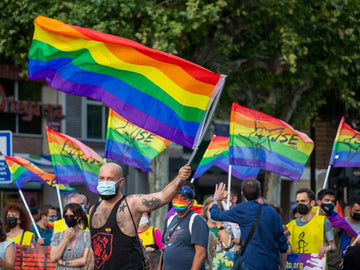
But then, reflecting on my discomfort, I realized I could relate to the people who are uncomfortable with my sexual freedom and personal development—who are probably the same people who were there, in that procession. That's when I decided to do this episode of our podcast: "10. How Viable Is Discomfort?"
You can listen to it here:
"In this episode, I attempted to explore various questions about the ethical and moral limits of discomfort, and the importance of transgression in the fight for the basic rights of marginalized communities, such as LGBTQ+, Black, and women."
A central question was: To what extent can the discomfort we cause in others become a form of violence?
Is discomfort a natural response in a world of multiple realities?
How far is discomfort viable?
In a diverse society, it is natural that our beliefs and ways of life may make others uncomfortable.
However, discomfort can also become a form of violence, especially when used to justify discrimination, exclusion, and hatred toward certain groups of people.
What is the middle ground?
Is a middle ground possible?
How do we find it?
I believe that the relationship with discomfort must be built through deep and patient reflection. Perhaps it is in discomfort that we are able to live respectfully.
We must strive to understand the perspectives and beliefs of others, even if they don't match our own, and try to minimize the negative impact our actions may have. But is that possible in a world that restricts in every possible way?